Editorial | Articles about Cambodia | Khmer

Friday, November 16, 2007

With six proposed dams threatening the sustainability of the Lower Mekong River

Public Statement - for immediate release

16 November 2007


With six proposed dams threatening the sustainability of the Lower Mekong River,

Cambodian civil society calls for the MRC to address its shortcomings


In light of the recent reports that feasibility studies for six hydropower dams are underway on the Lower Mekong River, the Rivers Coalition in Cambodia (RCC) would like to respectfully call on the Mekong River Commission (MRC) and its international donors to address the shortcomings of the MRC in failing to prevent these potentially devastating projects from moving ahead and by failing to adhere to its regional responsibilities as outlined in the 1995 Mekong Agreement. We request that open and transparent dialogue on these issues commence with the MRCs annual governance meeting now being held in Siem Reap , Cambodia .


Given the importance of the MRC as a regional water governance institution responsible for ensuring sustainable development and the management of the river and its resources, we urge the MRC to end its silence on the major social and environmental impacts these six dams will produce while also fulfilling its obligations as outlined by the Agreement. Under the Agreement, the MRC is to conduct assessment for the protection of the environment and the maintenance of the ecological balance of the Mekong River Basin (Article 24) and should make every effort to avoid, minimize and mitigate harmful effects that might occur to the environmentfrom the development and use of the Mekong River Basin water resources (Article 7).


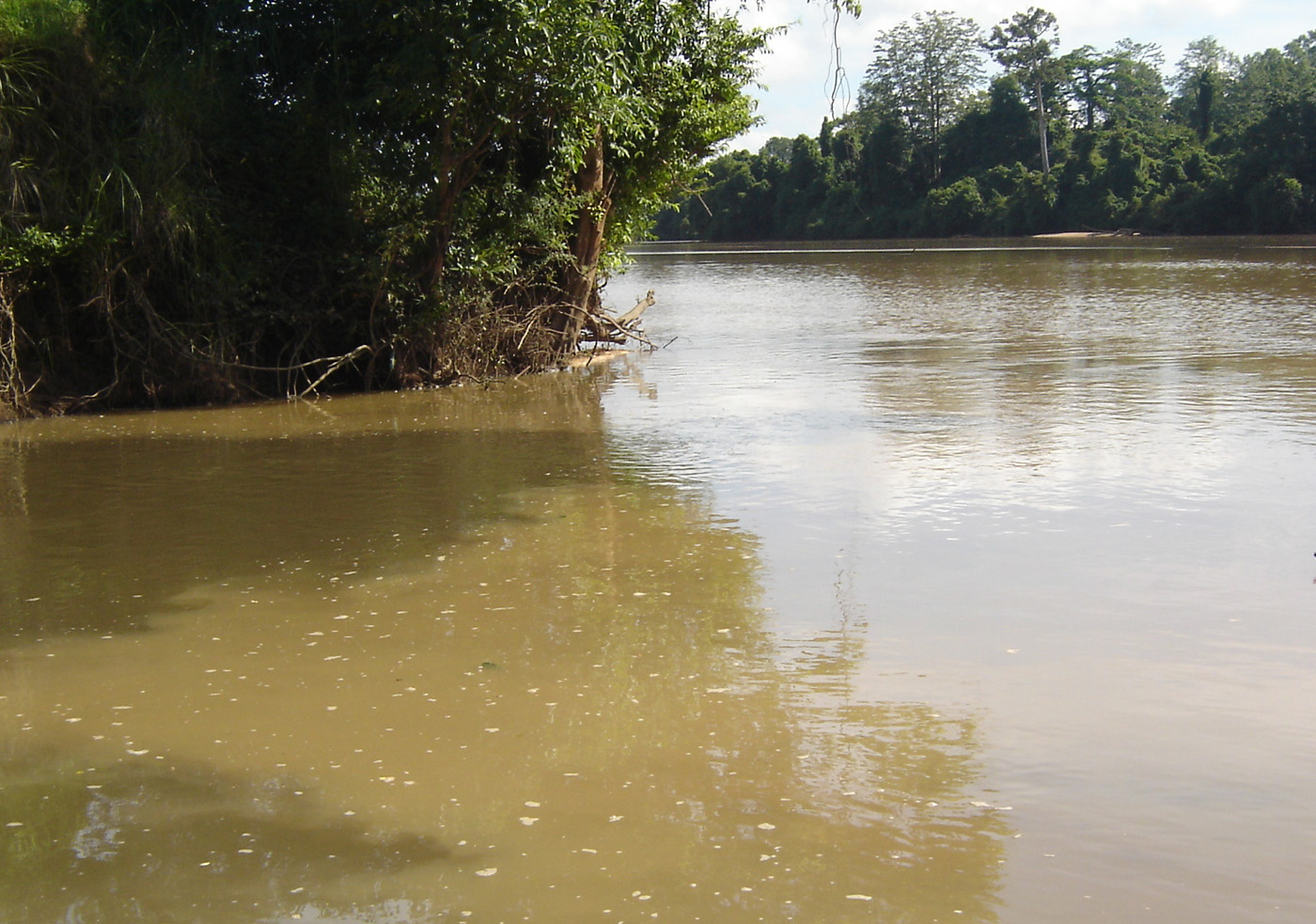
Feasibility studies are now being conducted by Thai, Malaysian and Chinese companies for six hydropower dams, one of which is the Sambor dam located in Cambodia . Another - the Don Sahong dam- would be located only one kilometer from the Cambodia-Laos border. The MRC should act quickly to ensure that regional studies, dialogue, and consultation are initiated and carried out. As the livelihoods of millions of Cambodians are strongly linked to the vitality of the Mekong River , the MRC should utilize its information and research to inform decision makers and the public of the environmental, social and economic risks of these projects.


Lastly, we would like to call on the MRC to recognize the severity and complexity of adverse transboundary impacts which have occurred from past hydropower development projects within the basin. The unresolved case of the Yali Falls dam on the Sesan River is just one example of how the MRC has not been able to prevent, ameliorate or mitigate the harmful transboundary impacts of hydropower development. While the case of Yali Falls has highlighted the urgent need for greater accountability and transparency among stakeholders and the need for improved public participation within a projects decision-making processes, other dams on the Sesan have continued to be developed in a non-transparent manner without adequate consideration for downstream impacts. Until remedy is brought to the communities living along the Sesan River and there are institutional mechanisms established to ensure compliance of the Agreement along with conflict resolution, among others, within the MRC, we fear further hydropower development in the region will continue following this unsustainable and avoidable path.


The RCC is a coalition of civil society organizations working to protect and restore river ecosystems and river-based livelihoods in Cambodia and is composed of the following Cambodian organizations: 3S Rivers Protection Network, Cambodian Volunteers for Society, Conservation and Development on Cambodia , Cultural and Environmental Preservation Association, Fisheries Action Coalition Team, and NGO Forum on Cambodia . For more information, contact:


  • Mr. Ngy San, Deputy Executive Director of NGO Forum, T: +855 12802290 or E: san@ngoforum.org.kh
  • Mr. Tep Bunnarith, Executive Director of CEPA, T: +855 12895624 or E: tep@cepa-cambodia.org
  • Mr. Kim Sangha, Coordinator of 3SPN, T: +855 12629221 or E: sesan@camshin.net

END

3S Rivers Protection Network (3SPN)
P.O. Box 89007,
Banlung Town,
Ratanakiri Province,
Cambodia
Telephone: (855) 75974112
Email: sesan@camshin.net

Labels:


» Read more!

Thursday, November 15, 2007

Southeast Asia faces challenges in time of prosperity

The gathering of Asian leaders around the 13th Association of Southeast Asian Nations Summit next week in Singapore comes at a moment of historic challenge in a region which, despite great progress in recent years, remains home to most of the world's poor.

Published on November 15, 2007

The year ahead promises another strong economic performance - though in an environment more fraught with risks and uncertainties. According to the World Bank's latest East Asia and Pacific Update, developing East Asia is set to notch 9.7 per cent growth in 2008 (down from 10.1 per cent in 2007) as the world economy hovers around 3.4 per cent this year and the next. But behind the encouraging projection for East Asia are several critical concerns that will occupy policymakers' attention, even as they press ahead with signing the new Asean Charter and implement the blueprint for an Asean Economic Community by 2015.

While Asean and the other Asian leaders meet, attention will also focus on the complex task facing the leadership of China and India. China, having sustained better than 10 per cent growth for 25 years now faces an uncomfortable disparity between income levels on the prosperous coastal zone and the more remote western provinces and generally between urban and rural areas. At the same time, China's environment policy has not been able to cope with its rapid growth. Maintaining high growth while closing the income gap and restoring the environment is a delicate balancing act, and one with implications far beyond China's borders.

India, which has growing engagement with the economies of East Asia, is also confronting a large agenda of reforms as it seeks to maintain high growth rates and lift hundreds of millions more people from poverty.

These could include strengthening policies that improve infrastructure performance, better-designed labour regulations to attract more labour-intensive investment and the creation of jobs for India's under-employed millions.

For the 10 members of Asean, the big questions at the summit will centre first on the cohesion of the grouping itself, both in response to internal issues and growing external competitive challenges.

High on the agenda will be the recent events in Burma, where millions remain in poverty while the rest of the region has been opening and growing. For years, Asean has been concerned about the so-called CLBV group - Cambodia, the Lao PDR, Burma and Vietnam.

Today, the focus is narrower: Vietnam is closer to the wealthier six members and growing strongly; Cambodia is registering double-digit growth and about to receive large revenues from oil and gas discoveries, and the Lao PDR is receiving new investments and reducing poverty after a period of steady reform. Burma remains the most serious cause for concern and the world is looking to the collective counsel of Asean and the broader East Asia Summit members (China, Korea, Japan, India, Australia, New Zealand) to help the United Nations and Burma chart a peaceful way forward - an outcome that could open the way for new economic opportunity and international assistance for the people of Burma.

Each country faces its own set of reform questions, made more pressing by the competitive pressure of China and India in an increasingly fast-paced, open and global marketplace.

The forces which Southeast Asia rode to prosperity in the 1970s, 80s and 90s now have the ability to work against the region unless it accelerates reforms which make it a more attractive and open investment destination. The challenges range from raising the skills and innovativeness of the labour force, to creating sophisticated financial systems, to maintaining social cohesion, to greatly reducing corruption. Without tough policy and institutional changes, countries now at the middle-income level stay where they are.

Malaysia, which has successfully achieved middle-income status, now faces the challenge of accelerating growth to reach developed country status by 2020 while maintaining national cohesion in a multi-racial society. Thailand, after recovering strongly from the financial crisis, has seen international confidence in its economic management shaken by the 2006 coup.

The country is now contending not just with the complexities of an election based on a new constitution, but with the challenge of restoring investor confidence necessary for strong economic growth. Indonesia, having brought the debt burden down spectacularly and generated increasing rates of growth faces the continuing challenge of creating sufficient new jobs for labour market entrants and spreading benefits to the poor. The most populous nation of Asean finds itself with 105.3 million people clustered around the $2-a-day income level, still highly vulnerable to shocks.

Challenges exist also for the smaller economies, with none looming larger than Cambodia's ability to benefit from oil and gas revenues. In many countries, the so-called resources curse has seen such revenues undermine good governance and generate instability.

There are, however, a number of positive examples of managing such resources, and Cambodia's medium-term efforts to reduce rural poverty and improve governance standards will depend heavily on decisions made about productive and transparent management of these additional revenues from oil and gas.

The year ahead is also likely to be memorable as the turning point in the global cycle. After five years of sustained and accelerating expansion, the US economy is slowing and global monetary policies are being tightened. The outlook remains for a "soft landing" and continued expansion, but

one that is weighted with more uncertainties and with greater volatility.

Peter Stephens

Peter Stephens is regional communications manager of the World Bank's East Asia and Pacific Region.

Labels:


» Read more!

Economic Success Based on Various Factors

A century ago, German sociologist Max Weber posited that Western-style economic development could not occur in Asia because of Asians' adherence to Confucianism, an ancient Chinese ethical and philosophical system propounded by Kung (Master) Fu Tzu, 551 B.C.-479 B.C., who preached, among other things, individual morality and ethics, as well as how rulers should exercise political power properly.

Wikipedia defines Confucianism as a "complex system of moral, social, political, philosophical and quasi-religious thought." This thought influences the cultures of China, Hong Kong, Taiwan, Japan and Korea, in North and East Asia; in Singapore and Vietnam in Southeast Asia; and in the territories with large Chinese settlements, until the present day.

Although generally considered "Asian" values, Confucian values do not form the cultures of all peoples and governments in Asia. But Confucius' social ethics and moral teachings have co-existed and blended with Taoism and Buddhism; and Confucian values and other Asian values have become complementary as they co-exist peacefully.
Like many different species of trees that form the same forest, Asia, as a continent of great social, cultural, ethnic, linguistics, religious and political heterogeneity, nevertheless finds its commonalities. Hence, the perception of "Asian" values: the importance of the community over the individual; order and harmony over personal freedom and individual rights; saving and wise management over laissez-faire; hard work and respect for government; and family and loyalty.

Of interest, one of Confucius' principles, "What you do not want done to yourself, do not do to others," brings to mind the Golden Rule, "Do unto others as you would have them do unto you," displayed, among other places, on Norman Rockwell's mosaic at the United Nations Headquarters in New York today.

Thus, in the 1990s when governments and countries that adhere to Confucianism produced what was known as East Asia's "economic miracles," Max Weber's century-old assertion was stood on its head, and Confucian values were cited as contributing to the region's extraordinary economic development.

But it was Southeast Asia's Confucian, Singapore's Lee Kuan Yew, and predominantly Muslim Malaysia's Mohamad Mahathir who emerged as the two most vocal proponents of "Asian" values contributing to the region's economic miracles. The success of these authoritarian rulers has been used by other autocratic Asian leaders to justify their authoritarian regimes in the face of liberal Asian opponents, such as Malaysia's Anwar Ibrahim or Cambodia's Sam Rainsy, and of Western critics.

For a long time, Eastern philosophies had insisted that while human rights and individual freedom espoused by the West are an admirable goal, they are meaningless and cannot exist in societies riddled with chaos and insecurity; only in an environment of order, stability and security can they survive and thrive.

While culture matters very much, there are other factors -- people, education, health, morale, effective management, administrative efficiency -- that help contribute to economic development.

When non-Confucian Malaysians copied Confucian Lee Kuan Yew's ways of governing and building the nation-state, Malaysia rose as an economic power-house at the heels of the four Confucian "Asian dragons" of Singapore, Taiwan, South Korea and Hong Kong.

A former Singaporean diplomat and scholar, Kishore Mahbubani, argued that Asians battled to promote Asian values as Western values and the Western-led globalization reached Asians' doorsteps, and Asians felt the need to promote self-esteem through the search for personal, social and national identities in a Western-dominated world.

According to Anthony Milner of the Faculty of Asian Studies, it was the consciousness of Asian, Confucian or Islamic identity that reinforced "resistance" to a universal, global community and has a Western flavor.

In a 1996 publication of the Institute of Philosophy and Public Policy, Xiaorong Li contended that Asian values actually advocate picking and choosing from other cultures to suit their political interests, as with the idea of free expression. Li, who dismissed autocratic leaders' argument that economic development goals override political and civil rights, argued that because starving and illiterate masses choose a "full belly" does not mean that deprivation will cease.

I wrote last week about Tibetan spiritual leader Dalai Lama, who warns, "food, shelter and clothing" don't transform people in need from being "only half human," because they need something else to sustain their "deeper nature: the precious air of liberty."

Perhaps it was Newsweek's Fareed Zakaria who summed it up best when he wrote that in the final analysis, while culture does matter as a contributing factor to a society's economic development, for Singapore's development it was neither culture nor Confucius but Lee Kuan Yew's effective way of running a clean and competent government that brought the island republic, once infested with malaria, into what it is today.

That government, built on Confucius' teaching of meritocracy, not only has effective institutions, but has acquired mass identification and support from Singapore's diversified peoples of different ethnicities who see themselves, first and foremost, as nationals of Singapore. All of these factors influence one another and altogether contribute to the island's impressive economic development. Singapore is on an equal footing with First World societies.

The people and leaders on Guam may find something they are able to learn from the discussion above to improve and build the island.

We can be "cynical" -- a word used by a former student of mine from the University of Guam, now a law student in the West Coast -- about what can be done on Guam, but things will not happen the way we would like unless individual initiatives are undertaken by people of strong will.

A. Gaffar Peang-Meth, Ph.D., is retired from the University of Guam, where he taught political science for 13 years. Write him at peangmeth@yahoo.com.

Labels: ,


» Read more!

Interview with Khieu Samphan After Ieng Sary's Arrest


13th November 2007
Translated from Khmer by Khmerization

Heng Reaksmey(HR): Hello Mr. Khieu Samphan.

Khieu Samphan: Hello, thank you.

HR: Mr. Khieu Samphan, in relations to the fast forward developments of the Khmer Rouge (KR) Tribunal in the last few weeks, do you anticipate that the KR Tribunal will summon you to appear in the near future?

Samphan: In relation to this I did not receive any news. I did not know or hear anything about that, but I heard people said many different things. And especially I have seen a broadcast on CTN TV last night which said that amongst the five KR suspects four have already been arrested. Only one suspect is still free and should be arrested soon. In the broadcast they mentioned my name clearly. I do not feel bad. If the tribunal wants to summon me any time I will go willingly. They do not need to arrest me. They just summon me and I will go. On the other hand, I have already chosen my lawyers. But most importantly, I have my own reasons. For example, the reason why I agreed to be the President of the Presidium of Democratic Kampuchea after Prince Sihanouk resigned in April 1976. So I have my own reasons. Other than that I can give you some more examples if you allow me to say it here.

HR: Please go on.

Samphan: O.K. First I'd like to say that I have my own reasons. I want to say it here so that the public will know and the tribunal can also consider before hand before they proceed with my case. First, why did I agreed to be the President of the Presidium of Democratic Kampuchea? Because at that time I thought that I was not only representing the KR regime, but also representing my whole nation which wanted to be independent and sovereign from America and Vietnam who has the ambition to force Cambodia to join their Indochinese Federation. This was one of the most important reasons that I wanted to tell you. Secondly, I would like to say that there were three people in charge of the Presidium (Permanent Executive Committee). But we never met and we did not have any office in which to work in.

HR: Mr. Khieu Samphan, you said that there were three people who were in charge of the Presidium. Can you tell me right now who those people were?

Samphan: If you want me to say their names I can tell you right now. First, I was the president. Second, Mr. So Phim was the first vice-president. Mr. So Phim was also the secretary (governor) of the Eastern Zone. And third was Mr. Ros Nhim, alias Moul Sambath, who was the second vice-president and he was also the secretary (governor) of the Northwestern Zone. There were three presidents of the Presidium but we never convened any meetings. And we did not have any office or any departments to control. If you want to know more you can ask any surviving members of the KR regime. So this has confirmed that I did not have any powers. My position was only ceremonial, only a symbol or a representation of our nation, including the KR regime, representing our nation that wanted to be independent and sovereign like I have told you earlier.


HR: Thank you, Mr. Khieu Samphan. Up until today, are you scared about the prospect of you facing the tribunal?

Samphan: I did not have anything to fear, like I told you earlier. I have never done anything wrong toward me nation and my people. I never sold my nation. Even one cent I have never stolen from my nation. The only thing that I will do is to tell all about what I have done from 1975 to 1979. I have just told you about the structure of the presidium. I even can tell you one more thing that some people said that they cannot believe that I did not know what had happened during the KR regime. I read in the newspapers that many people cannot believe why a head of state did not know anything. This is what I wanted to tell you also.

HR: Go ahead.

Samphan: Because in the KR regime they have their own rules. During the Democratic Kampuchea regime, those who were evacuated from Phnom Penh knew about those rules. Their rules stated that people only need to know about their own jobs and roles. You don't need to know about other people's jobs. The rules at that time were very clear. People at every level must observe those rules. It doesn't mean that because you are a head of state you don't need to observe those rules? Those rules also applied to me, so I never wanted to know about other people's jobs and other people were too scared to tell me about anything. And I only stayed in one place and never traveled anywhere so I knew nothing about what had happened. This is what I wanted to tell you.

(To be continued on part 2, 3 and 4...)
This is the first part of a 4-part interviews with Khieu Samphan (pictured) conducted by Mr. Heng Reaksmey of Voice of America Khmer Program following the arrests of Ieng Sary and his wife, Ieng Thirith on Monday, 12th November 2007.

Labels: ,


» Read more!

Sam Rainsy's letter to Keat Chhon requesting for the application of appropriate measures to lower gasoline price


Kingdom of Cambodia
Nation – Religion – King

National Assembly

Phnom Penh, 14 November 2007

To H.E. Keat Chhon
Minister of Economy and Finance

Subject: Request for appropriate measures to lower the retail price of gasoline in Cambodia.

As Your Excellency is well aware of, the retail price of gasoline sold along the streets in Cambodia is much higher than those in neighboring countries. The list below indicates the price of 1 liter of gasoline sold on 14 November 2007:

* Cambodia: 4,400 riels
* Thailand: 3,658 riels (1 liter costs 31 Baths; 1 Bath is equivalent to 118 riels)
* Vietnam: 2,877 riels (1 liter costs 11,600 Dongs; 1,000 Dongs are equivalent to 248 riels).

In the name of poor people whose livelihood has deteriorated significantly due to increasing prices of goods, in particular the price of gasoline which has increased to an unacceptable level, I am requesting Your Excellency to take the following measures to lower the price of gasoline to a level on par with those observed in neighboring countries.

* Measure # 1: Lowering taxes on gasoline from over 1,000 riels per liter to 300 riels per liter.
* Measure # 2: Lowering the profit margin of gasoline distributors from more than 500 riels per liter to 200 riels per liter.

The combination of the two measures above would lower the price of gasoline by 1,000 riels per liter (a reduction of 700 riels from Measure # 1, and a further reduction of 300 riels from Measure # 2), thus lowering the price of gasoline from 4,400 riels to 3,400 riels per liter.

May I add that:

- Measure # 1 will help end gasoline smuggling which is endemic and reaches a very high level in Cambodia because our taxes are much higher than those in neighboring countries and because of rampant corruption. Due to smuggling, a large portion on taxes on gasoline do not end up in the State coffer, but instead they end up in the pockets of corrupt people who benefit from the support from powerful government officials. Following the lowering of gasoline taxes as proposed above, those who have been smuggling will have no more incentive to continue their illegal activities, and on the other hand, the lower taxes will be collected on the entire volume of gasoline imported into Cambodia. Therefore, the state will collect more revenues than before [a lower tax rate applied to a larger volume produces more revenues for the State than a high rate applied to a much smaller volume due to large-scale smuggling], while the population can buy gasoline at a lower price than before. Only the corrupt people who have been involved in smuggling will incur income losses, but the government should not protect these dishonest companies and businessmen.

Furthermore, may I remind Your Excellency that when crude oil price and gasoline price increase on the international market, States usually lower taxes on gasoline, just like what the Vietnamese government did recently.

- Measure # 2 is aimed at lowering the excessive profit margin of retail companies which are colluding to fix the selling price as high as they please, by choking off consumers. I am not talking about foreign companies (Total and Caltex/Chevron) which are paying the proper amount of taxes to the State, but I am pointing at some of the Cambodian companies (Tela and Sokimex) which are backed by powerful government officials, which are involved in smuggling and corruption and which are exploiting the hardworking people any way they want.

It is regrettable that, in current Cambodia, workers receive relatively low salaries, yet the price of goods are very high in comparison to those in neighboring countries where workers receive much higher salaries than ours, and the price of goods are much lower than in our country.

Trusting that Your Excellency will take the appropriate and fair measures as requested above, I convey to Your Excellency my sincere regards.

(Signed) Sam Rainsy
Member of Parliament

CC:
- Office of His Majesty the King
- Council of Ministers
- National Assembly Secretariat
- National and international Media
- Archive

Labels: , , ,


» Read more!

Wednesday, November 14, 2007

Khmer Justice

November 14, 2007
Commentary By YOUK CHHANG
Published by The Wall Street Journal
Phnom Penh, Cambodia: They live a privileged and comfortable life, while the majority of Cambodians still earn less then a dollar a day.Cambodians often refer to the Democratic Kampuchea regime, which was responsible for the deaths of nearly a quarter of the population between 1975 and 1979, as the "Pol Pot-Ieng Sary clique." Although few people knew the identities of the secretive leaders of Democratic Kampuchea until after the regime fell, they knew about Ieng Sary by the mid-1970s. By placing his name next to Pol Pot's (the two were brothers-in-law), Cambodians clearly recognize him as one of the masterminds of the genocide. Monday's arrest of Ieng Sary and his wife, Ieng Thirith, is a victory for all those who suffered through the cruelty of their rule.
Ieng Sary became an ardent communist while he and Pol Pot were studying in Paris in the 1950s. Later, in Democratic Kampuchea, he served as both deputy prime minister and foreign minister. After escaping to the gem- and timber-rich Khmer Rouge zone of Pailin near the Thai border in 1979, he continued to hold senior positions in the Khmer Rouge until 1982, even though he had been given an in-absentia death sentence in 1979 by the Vietnamese-backed government. In 1996, he was pardoned by King Sihanouk at the request of then co-prime ministers Hun Sen and Prince Ranarridh, in exchange for his defection to the government in the name of peace and reconciliation.

His wife Ieng Thirith was one of the few women who held power during the regime. Minister of social affairs during Democratic Kampuchea and head of the regime's Red Cross Society, this strong woman came from a well-to-do family and met Ieng Sary while she was studying Shakespeare at the Sorbonne. Ieng Thirith has denied that she was a member of the Central Committee, saying she only wanted to serve her country and people, and never wanted any "high position." She also claimed that without the sacrifices of those who joined the revolution, Cambodia would have been erased from the world map.

Like perpetrators everywhere, both have denied any wrongdoing and are seemingly without remorse. In 1999, Ieng Thirith wrote to a Phnom Penh newspaper, praising those who left their comfortable villas and took up residence in Cambodia's jungles during the early 1970s to defend their motherland. She has never wavered from the ideals of a Maoist-inspired revolution in which peasants would rule.

But the couple, who are now in their mid-70s, have not chosen to live according to their ideals. Instead of adopting the modest circumstances of the people they claim to revere, they have a lavish villa in downtown Phnom Penh and regularly fly to Bangkok for medical treatment. They are also active Buddhists and have built a stupa at their local pagoda. They seem to forget that the Communist Party of Kampuchea had eliminated Buddhism, considering it, like all other religions, to be "reactionary."

Cambodians are quick to grasp the irony. This husband and wife, who were among the chief architects of Cambodia's killing fields, serve the revolution in name only. They live a privileged and comfortable life, while the majority of Cambodians still earn less then a dollar a day. The poor, in whose name the revolution was formed, are perhaps even poorer because of them and they are still powerless today. The Khmer Rouge left us with a terrible legacy in 1979 -- a country whose education system, religion, banks, commerce, communications and agriculture had all been destroyed. About three-quarters of the survivors were widows who were left to pick up the pieces and move on.

Ieng Sary, Ieng Thirith, Pol Pot, Nuon Chea, Khieu Samphan and others turned all Cambodians (except themselves, of course) into peasants during Democratic Kampuchea. The entire population was forced into the fields to grow rice and build irrigation systems, yet a huge percentage of them starved to death or died of overwork and untreated diseases. Ieng Thirith visited the irrigation projects many times during Democratic Kampuchea and doubtless saw the results of the regime's policies. The revolution may have failed, but its effects are still very much with us today.

The arrests of Ieng Sary and Ieng Thirith will at last give ordinary Cambodians a victory. This couple, who have changed little and still fail to understand the pain their victims endured, will finally be called into account and perhaps soon see justice done in a court of law. The arrests of the most politically untouchable of the Khmer Rouge leaders is a powerful message to the people of Cambodia and gives us hope that our country will move toward a better future.


Mr. Chhang is the director of the Documentation Center of Cambodia, an independent nongovernmental organization that holds the world's largest collection of documents from Democratic Kampuchea.

Labels: , ,


» Read more!

Tuesday, November 13, 2007

EMOTIONAL VOTERS


Source: Alternatives Watch
Date: 10 November 2007

EMOTIONAL VOTERS

A friend has raised an interesting point the SRP, or any party wishing to become the next ruling party, may want to consider for the 2008 election campaign. He notes the CPP has already begun spreading the word that if it loses the election, there will be war again. The prime minister has publicly insinuated that if a war is to start under another prime minister after the next election, it will not be his responsibility. The friend argues the SRP's attempt to raise an expectation that it will win the next elections can only damage its chance of success. Such a campaign will only turn voters' worry into fear as they know the CPP has the capability of making war; it controls armed forces that are neither independent nor impartial.

The friend's opinion signifies the importance of emotion in elections, which is supported by Drew Western, who argues in his book "The Political Brain: The Role of Emotion in Deciding the Fate of the Nation" that voting is an emotional exercise. Western says the political mind is a passionate mind. The vote will depend on who has played successfully on voters' fears, harnessed voters aspirations and hope for the future, or pricked voters' consciences. Western does not agree with cooler heads who think that, when choosing their political leaders, voters rely on those laudable Enlightenment virtues of rationalism and empiricism, that they analyse facts and figures, dispassionately weigh up costs and benefits, make clear-head comparison of policy, issue by issue.

According to Western, the election is a battle of stories. The CPP story is that it was the 7 January liberator putting an end to mass killings. It has delivered peace and stability, and one of the best economic growths for years. The opposition may point to holes in the story, however. The gap between rich and poor is still large, if not expanding. Rural Cambodia that makes up a large section of the country is still doing tough, and there is no end in sight.

With the CPP story, the prime minister often speaks of war and instability serving as a warning to electorates of upheavals without him in charge. It seems the prime minister has been a faithful disciple to the US Vice-President Dick Cheney's 1 percent doctrine: if there is only 1 percent chance of terrorist attack, act as if it were a certainty.

If the western psychology as Drew Western expounds works within the Cambodian context, the electorate's emotional - not rational - response to the stories, will deliver victory in 2008 to the CPP with the help of the SRP. The former's story may have holes in it, but it will play the fear card to stir the voters' emotion. With its campaign for an outright win, the SRP, perhaps unintentionally, will make the fear real. In the face of such congruent campaigns from both major parties, the emotional side of the Cambodian voters will definitely have nothing to lean on besides preserving the status quo.


Ung Bun Ang


QUOTABLE QUOTE

"The heart has its reasons which reason knows nothing of."

Blaise Pascal (1623-1662), French philosopher, mathematician, and physicist. Pensées.

WAY TO GO

The SRP president, who has secured an indefinite term for his SRP presidency, wants a limit of one term for prime minister. He is quoted to have said, "We want to give opportunities for our well-educated younger generations. When only one person consolidates all the power, it means that person insults or looks down on other educated people."

Labels: ,


» Read more!

Wednesday, October 24, 2007

The price of peace

By Simon Taylor , of Global Witness.


Today marks the anniversary of the 1991 Paris Peace Accords - the agreement which signalled the beginning of the end of decades of violent conflict in Cambodia and the start of the biggest and most costly peacekeeping operation in history. Yet 16 years later, the country once regarded as the international poster-boy for post-conflict nation building is fast becoming South-East Asia's newest kleptocracy; its reputation marred by allegations of massive corruption, impunity, human rights abuses, and repressive, undemocratic governance. The international community - whose money has bankrolled this shattered state's rehabilitation - has singularly failed to stop the rot. Lessons must be learned if other fragile states are to avoid a similarly disastrous outcome.

On paper, Cambodia's natural resources and state assets - the land, forests, minerals and heritage sites - were the basis for kickstarting the post-conflict economy. The revenue generated should have gone towards poverty alleviation and rebuilding infrastructure. Instead, systematic and institutionalised corruption has deprived the entire population of the revenue that could have come from these public goods.

A cursory glance at today's Cambodian business sector reveals the country's forests, land, mining, ports, national buildings and casinos to be predominantly controlled by a handful of government-affiliated tycoons or family members of senior political figures. Information about deals is not made available to the Cambodian people to whom the state's resources belong. Similarly, consultation with local populations dependent upon forests or land is often non-existent. For many Cambodians, the first they know is the sound of a chainsaw revving or a bulldozer arriving to flatten their crops.

Cambodia's forests are a case in point. In the 1990s they were described by the World Bank as the country's "most developmentally important resource". Today they are largely degraded, having been sold off over the years by the political elite to private companies or individuals intent on logging as much as possible to turn a quick buck. Most of the vast wealth generated has not reached the national coffers: instead it appears to have been siphoned off into the private bank accounts of the loggers and their political patrons.

While a booming textile and tourism industry has resulted in double-digit economic growth in recent years, the reality is that Cambodians are still among the world's poorest people and wealth inequality is increasing. With an estimated 35% of the population living below the poverty line, and the vast majority without electricity or mains water, survival remains a challenge for millions. Meanwhile, government-sanctioned forced evictions and land grabs are rife, human rights violations are common, corruption is endemic and impunity is the norm. Over the past five years, this has been accompanied by a backward-slide in space for civil society and political opposition to operate, resulting in a governance system recently described by the UN rapporteur on human rights as "a shaky facade of democracy".

Cambodia's donors have provided the equivalent of over 50% of the government's annual budget for over a decade now. Having spent billions of dollars in setting up a democratic system in Cambodia, one would assume that donors and their domestic tax payers have an interest in preserving it. Yet the international donor community has consistently failed to bring the government to book for blatant violations of its commitments to protect human rights, fight corruption, and ensure the protection of natural resources. In the 1990s, turning a blind eye was justified by the need to ensure "stability". From stability would flow economic development, and from economic development would flow political pluralism. The past 16 years have revealed the impotence of such logic. With each successive failure of the donor community to deal with the regime's failure to honour commitments to good governance, those responsible have increased their wealth and impunity. The end result is that Cambodians find it harder and harder to call their government to account.

It is not too late for the international community to redefine its terms of engagement with Cambodia, but it will require a fundamental shift in mindset. At its core must be a recognition that stripping a country of its assets for personal gain represents a mass violation of the social and economic rights of its people. Next, donors must impose sanctions on those who they believe are corruptly profiteering from the exploitation of the state's resources. These measures should include a freeze on all assets, restrictions on international travel and a ban on doing business with nationals of the donor country.

This will be a bitter pill to swallow for those donors who would prefer to enjoy an amicable relationship with the Cambodian government. Yet, if the international community cannot get it right in a small and relatively non-strategic country such as Cambodia, what hope for the likes of Sudan, Liberia, Sierra Leone and the Democratic Republic of the Congo? To continue to give overseas aid without the courage to tackle blatant mass corruption and poor governance is the equivalent of pouring good money after bad. Worse, it confers a badge of approval and reinforces the legitimacy of a government which is not acting in the interests of its own population. Cambodia and its people deserve better.

Labels: ,


» Read more!

Cambodia is becoming more and more Vietnamized


Cambodia is becoming more and more Vietnamized

In 2007, almost every week, the number of “friendship” visits between Hanoi and Phnom Penh by communist Vietnamese leaders has multiplied, along with the signing of “cooperation” agreements in all fields, such as political, judicial, parliamentarian, military, administrative, economic, technology, cultural religious, etc… with their Cambodian counterparts. For the Cambodian leaders, these are obviously a systematic cooperation-alignment of their parties, of the national institutions at all levels, and of all the activities in Cambodia with those in Vietnam. That is how a communist Vietnam came to teach to a liberal Cambodia, for example, on how to create laws, how to organize internal elections, how to manage its economy, how to broadcast information, how to develop its literature, how to supervise the youth, and how to rule religious practice of Cambodians. Any opposition to this domination by Hanoi is punishable by jail sentence, or by kidnapping “sentence” and deportation to Vietnam by the secret police, such as the case of the alleged crime against “the Cambodia-Vietnam” friendship accused on Venerable Tim Sakhorn.

At the same time, after some 5 million Vietnamese people are counted in Cambodia between 1979 and 2003, the wild colonization of Cambodia by Vietnamese “immigrants” is being pursued unabated throughout Cambodia, thanks to the illegal agreements dated from the 80s, and thanks to the protection of Associations of Vietnamese people already established in Cambodia. Currently, Vietnamese people form the majority in Cambodia eastern provinces, such as Svay Rieng and Prey Veng, and with the so-called “common economic zones,” the Vietnamese in fact control the economy and the administration in these two provinces. Higher north, our provinces of Kampong Cham, Kratie, Mondulkiri, Ratanakiri and Stung Treng are again under the domination of Vietnamese troops, militias, workers and their families, again thanks to the “economic cooperation,” with huge land concessions – and national sovereignty – lasting 70 years of more, granted by the Cambodian People’s Party (CPP) directly to the Communist Party of Vietnam (CPV). Similar concessions were also granted in the provinces of Kampong Thom and Preah Vihear.

At the end, nobody talk or dare talk about the forced annexations by Hanoi of the Koh Tral and Krachak Ses Islands in 1982, as well as a large swath of Cambodia maritime territories. The so-called “historical waters and common waters between Vietnam and Cambodia” are totally under Vietnam’s law and boot. Furthermore, the Vietnamese forces arrogate itself the right to control the entire maritime space located in front of Cambodia’s costs in the province of Kampot: the weak vessels of Cambodian fishermen who are found there, risk being sunk by Vietnamese patrol boats, or they risk being arrested by the Vietnamese guns, and even last month, Cambodian fishermen from Kampot who were protesting the incursions of Vietnamese fishermen in Cambodian waters, were taken and severely beaten by the Vietnamese maritime police from Koh Tral island, before they were later released.

Therefore, the Vietnamization of Cambodia inexorably moves forward in great strides. Those among the Cambodians and foreigners who concluded and promised to respect scrupulously, the October 23, 1991 Paris Peace Agreements on Cambodia, in order to restore the sovereignty, independence, territorial integrity and inviolability of Cambodia against all external aggressions and interference – from Vietnam, in particular, which occupied Cambodia militarily – shamefully remain silent. Some even found “normal” this unremitting invasion of the “weak” Cambodia by the “powerful” Vietnam.

In reality, the Paris Agreements were not elaborated or adopted by the governments uniquely, but they were adopted for the Right and the Action of the citizens who can find in them their landmarks and their inseparable guaranties.

Cambodian citizens must continue to protest, they must support the legitimate protests by the victims, they must demonstrate against the Cambodian Government and its accomplices. Cambodian citizens must protest against the Superpower and Powerful governments which maintain the corruption and the dictatorship of Mr. Hun Sen and his CPP. Cambodian citizens must, at the very least, write to these governments, even personally, to alert them and to ask them to honor their engagements for a fair application of the Paris Agreements which they also signed. Cambodian citizens must tell these governments that their support to this regime must come to an end, if they sincerely want peace for Cambodia and the wellbeing for its citizens.

The Cambodian citizens must react, and they should not expect anything from those who betrayed them and abandoned them, if they want their Nation to still survive.

Paris, October 23, 2007
The Cambodia’s Border Committee
in France and Worldwide

(Singed) Dy Kareth,
Vice-President

Labels: , , , , ,


» Read more!

Wednesday, October 17, 2007

Press Advisory: Northeast Cambodians Abandon Riverside Homes for Safer, Higher Ground


PRESS ADVISORY - For Immediate Release
15 October 2007
3 S Rivers Protection Network

Report: Northeast Cambodians Abandon Riverside Homes for Safer, Higher Ground

Ratanakiri: More than 3,500 dam-affected people in northeastern Cambodia have abandoned their riverside villages and moved upland, according to research conducted by 17 community-based researchers with technical support by the 3S Rivers Protection Network (3SPN) in Ratanakiri province.

3SPN researchers found that 722 households from 17 villages along the Se San River have resettled upland – without government or donor assistance – to escape damaging floods and erratic river conditions caused by upstream dam operations in Vietnam.

"We published this study to educate government authorities and international donor agencies about the difficult life imposed on indigenous communities since Vietnam built the Yali Falls dam in 1993," says Meach Mean, Acting Coordinator of 3SPN.


The 720 mega-watt Yali Falls dam is the first and largest of four hydro dams built on the upper Se San by Electricity of Vietnam.

"Abandoned Villages Along the Se San River in Ratanakiri Province, Northeastern Cambodia" was prepared by local researchers from three of the eight indigenous groups living along the Se San in Cambodia. The report highlights villagers' perspectives on how the Se San has changed in the last decade and what compelled them to abandon their riverside homes:
  • Since dam construction upstream, the river is no longer a reliable source of fish and water for irrigating rice and dry season crops, Mr. Roman Mal, a Jarai Village Chief of Dal Pok village, explains: "Villagers have lost their hopes and dependencies on this river, because nearly all of the river resources are gone."
  • Mr. Pous Pin, a Brao villager from Ta Veng district stated: "We moved our village away from the riverbank because we no longer could cultivate rice in our Chamkars (farm land) along the Se San River which flooded every year and because so many people and animals have died (from the floods)."
  • "Everyday, both during the day and at night, I live with fear of severe water fluctuations and of the dam breaking. I cannot sleep well at night. I often get up and go to see the river late at night because I fear a water surge may come," said Mrs. Romas Veun, a Jarai villager from Pi village who has recently built a house away from the river for shelter in an emergency.

Earlier this year, Electricity of Vietnam released an assessment of the downstream impacts of Se San hydro development but the report – prepared by Nordic engineering consultants

SWECO Grøner – provides no information about the villagers' move upland nor does it recommend compensation for damages caused by EVN dams.

3SPN is a local organization working with communities affected by hydropower development in Vietnam and Lao PDR on the Se San, Srepok and Sekong rivers in northeastern Cambodia.

For more information: Contact: Meach Mean, Acting Coordinator, 3SPN, se...@camshin.net or at +855 (0) 11214752, or Ngy San, Deputy Director, NGO Forum on Cambodia, s...@ngoforum.org.kh or at +855 (0) 12802290. Hard copies of the report can be requested from 3SPN at se...@camshin.net. The electronic report is available in English and Khmer at NGO

Forum on Cambodia's website at: http://www.ngoforum.org.kh/Environment/Docs/mekong/Abandoned%20Village%20Report%20August%202007.pdf

Labels: , ,


» Read more!

Tuesday, October 09, 2007

History, Ethics, Culture and Practices

Bon Pchum Ben or Feast Festival for Ancestors

Snapshot
Bon P'chum Ben is the remarkable ceremony of Cambodian annual gathering. On the 15th day of the waning moon (Ronouch) during the tenth month of the Khmer calendar, called Pheaktrobotr, Cambodian Buddhists celebrate this auspicious P'chum Ben event (the Ceremony of the Dead or Feast Ceremony for Ancestors). This ceremony usually falls in the first half of September in the Western calendar. This year it falls on September 22. It is called P'chum Thom (big ceremony). Actually, the celebration has begun since the waxing moon (K'nert) day falling in September 7; and this is called P'chum Touch (small ceremony). During the period between small ceremony and big ceremony, people always commit to take turn in offering food to the monks who are staying in door of three months of rainy retreat. This is called Kan Ben (food offering turn).

The history, meaning and objectives
According to the Vinaya (discipline) of Bhikkhu Monks (Sangha); they have to stay in door or rainy season hibernate for three months starting from the first waning moon of Srab (July) to the fifteenth waxing moon of Assoj (October) annually. These three months period reasonably recommended by the Sangha assembly presided by Lord Buddha to amend this law in order to benefit for the Bhikkhu monk community such as:

– monks have to spend this full time three month to study and practice the Dhamma,

- teachers, students and laypeople can make acquaintance with each other in one place to bolster their unity,

- and it is the rainy season which is hard for the monks to go outside as it is wet, muddy and easily to step on the crops of farmers.

But monks are able to go outside the door of temple during the rain-retreat unless they have sufficient excuses such as to preach the Dhamma, to visit ill relatives, to participate or preside over functions or to get away from some disasters etc. However, if any monks have offended the rules, they would be sentenced by a weak probation decided by the Sangha's assembly and they can be uncharged when they confess and follow accordingly in front of the assembly.

Through this important three months of strict practicing of Dhamma makes laypeople further their commitment and generosity to feed and take care all monks Sangha. So each family and village will take turn to offer food and other four necessities to monks daily. And there are two specific days which laypeople join together to make the ceremony more crowded and significant. They are the P'chum Touch (min ceremony) and the P'chum Thom (large ceremony). Especially, P'chum Thom is recognized as the most important day for all citizens regardless of ethnic background, color, race or faith should be attend, pay gratitude to their relatives and enjoy the ceremony.

P'chum Thom has happened since the Sakymuni Buddha period. When king Bhibisara felt sad about his absence to pay back gratitude to his ancestries and heard the crying voice every night in his palace, he went to ask some advices from the Buddha and he got insight that he has to celebrate the food offering ceremony annually. We don't know that when this cult of celebration was being celebrated by Cambodian Buddhists, but following our chronology observation, it must be arrived Cambodia in the same time of the arrival of Buddhism. It has become the root of Khmer culture and unique identity. This celebration has coincidently combined with the genuine religious cult of Cambodia that dominantly respects and worships their ancestors. This religious cult is called the Religion of Neakta.

The full outcomes of P'chum Ben day signifies many different aspects to bond Cambodia together in both material and spiritual, social value and unique identity, harmony and prosperity. It is not different from the Choul Chnam day or Cambodian New Year Day that these two celebrations are remarkable event and the most auspicious day.

We can outline some of these prospects relating P'chum Ben day.
1. To offer the chance to everybody to stay away from all evils, to cultivate the good and to purify their mind.
2. To provide the opportunity for everybody to empower their peaceful mind and spiritual adherence.
3. To pay gratitude to their dead ancestors as well as their living seniors.
4. To share their kindness and compassion by exchanging of their food, snacks and money with each others and especially to the poor people. Remarkably, this period is considered as the hardest time for low income or poor conditioned people to find food to eat in Cambodia.
5. To bond everybody together through their spiritual practices, gratefulness, social networking and local stylizing.
6. To increase the sense of multiculturalism, fraternity, compassion, respect, unity and righteousness.
7. To unify the interests, concerns and identity roots of the national or international distinctions and stratifications.

Factual accounts of P'chum Ben Day
There is the reality and legendary about P'chum Ben Day.
- Buddha taught and explained that our ancestors who died and reborn as angels, animals, human beings or in hell cannot receive our meritorious dedication. But if any of our ancestors or relatives who were born as the hungry ghost (Praet); they need food a to eat and they cannot eat like us; they eat only through our goodness, generosity and offering to dedicate to them by naming those relatives respectively. Doing this, all those relatives of hungry ghost can receive all the delicate food and offerings. So it is possible for us to gain merits as our ancestors can receive our offerings as well as through our own hearted generosity and gratefulness.
- Buddha encouraged King Bhimpisara to celebrate this ceremony as well as everybody has to celebrate this too. Nobody in this world has never had relatives or ancestors who have been passed away. More than this, this auspicious celebration also inspires us to pay gratitude with our living parents, grandparents or seniors too.
- As the season is remarkable for its darkness during the night time makes Cambodian people think that their dead ancestors could be released from the abysses of woeful realms and wander around all over seven temples. If they don't see any of their children or relatives have offered any food or gain merits to dedicate to them; they will be sad, upset and sorrowful in their heart. This sadness echoes badly to their living relatives which can bring along with bad Kamma, bad luck and sufferings.


How to practice during ceremony?
During this time everybody prepares their body and mind, and sacrifice both materials, time and mind to join this day. All villagers and all different stratifications of people prepare their food and sweet, four necessities, offerings, special traditional dressing clothes; and they obligate to undertake the five commandments during this auspicious occasion.

For the food comprises of:
- Ordinary meal such as rice, soups, salted grilled fish, fresh grilled fish with mango sauce, spring roles, salad and fermented fish (prohok) etc.
- Some seasonal snacks or bakes such as Num Onsam and Num Korm (steamed cakes wrapped in banana leaves). Num Onsam is a kind of cylindrical cake of glutinous rice wrapped around a mixture of pork, salt and other ingredients. Num Korm and Nom Thmey is shaped like pyramid and made of rice-flour and filled with coconut and palm sugar mixture.
Some other distinctive fruits and snacks are also included.

For the four necessities include:
1. Saffron robes or clothes
2. Food and other storable foods
3. Umbrella, raincoats or shelters
4. Medicine, shampoo, toothpaste and tooth brash etc.
These four necessities always packed with brightly, pyramid wrap.

Some other Offerings includes
Candles
Incense sticks
Flowers
Water
Perfume
Garland or leis

Clothing is very colorful and delicate which include:
Sompot Hol or Sompot Phamoung which is the silk skirt of Cambodian women. It is dressed for national important day and Buddhist ceremonies. These delicate skirts always dress with short sleeve blouse (Aov Pak) made in Cambodia and put with tiny scarf. Men also wear neat dresses and polite.

Five commandments or precepts:
The five precepts in which every Cambodian Buddhist is aware about it and practice them in their daily life. Importantly, in this occasion they have to observe it to re-affirm their obligation and purification.
1. Panatipata veramani sikkhapadam samadiyami
I undertake the precept to refrain from destroying living creatures.
2. Adinnadana veramani sikkhapadam samadiyami
I undertake the precept to refrain from taking that which is not given.
3. Kamesu micchacara veramani sikkhapadam samadiyami
I undertake the precept to refrain from sexual misconduct.
4. Musavada veramani sikkhapadam samadiyami
I undertake the precept to refrain from incorrect speech such as lying, malicious words, harsh words and talk in vain.
5. Suramerayamajja pamadatthana veramani sikkhapadam samadiyami
I undertake the precept to refrain from intoxicating drinks and drugs which lead to carelessness.

Overview the appropriate practices during the celebration
When food, dressing and other necessities are already prepared; individuals have to be aware when they are stepping into the monasteries compound or ceremonial spaces. They should keep quiet, modesty and polite. Wearing hats are not allowed. They should take off shoes before stepping into the hall or ceremonial space. People will go in front of the Buddha statues and sit with a right position calmly, bow down three times, lit the candles and incense sticks, offer flowers and perfume. After listening attentively to the monk's preaching, chanting or other blessing; they should prepare food which is ready to offer to the monks. Most of the time, all participants will put their rice into the rice bowl collected by the long procession of monks. During offering the food into alms bowl, they have to take off shoe and concentrate on merits and dedicate to their dead ancestors by naming with good wishing.

All of these good-deed activities must be attentive, silent, peaceful, mindful and compassionate. When our mind is peaceful during the cession; we can feel the great merits growing in our heart and the blissful sense we should receive from this paying gratitude to our ancestors.


More than this, when the application of our mind access deeply, subtle and insightful to the Dhamma; we can get into the Dhamma stream which is the stream of Enlightenment.

Conclusion
There are many other things symbolizing Cambodian culture and identity, but Pchum Ben Day is considered as the most important one. In this day, people will not only attend because of their faith, their generosity, tradition or habit, but to survive their daily life and strengthen the "family society system/tradition of Cambodia". Distinctively, to develop their individuality of right thought and right understanding; and strive persistently toward individual's goal follows the eightfold path of ethics awareness, peaceful meditation and insightful wisdom.

This is rigorous for everybody to come, participate and enjoy this solemn day.

By Preah Bhikkhu Vodano Sophan S.

August 22, 2006

Email: sophan@hawaii.edu

Original source: http://sophanse.blogspot.com/2006/08/cambodian-pchum-ben-day-festival-or.html

Labels:


» Read more!

Ke Kimyan-Hun Sen Rift Inside Cambodia's Ruling Party Said Flaring Up Again


17 Sep 07
By Srei Ka
Moneakseka Khmer
Translated from Khmer and posted online

A high-ranking official of the Cambodian People's Party [CPP] said that Prime Minister Hun Sen and Armed Forces Supreme Commander Ke Kimyan seldom see eye to eye with each other. In 1997-98 Hun Sen and Ke Kimyan had problem with each other once before, but thanks to a timely internal reconciliation effort and also because he did not want the outside world to see that the CPP was rifting, Hun Sen accepted the party's internal arbitration since Ke Kimyan was also a fellow member of the CPP Permanent Committee. At that time, Ke Kimyan and Sar Kheng were not yet related by the marriage of their children, but when Hun Sen and Ke Kimyan fell out with each other, Chea Sim, Heng Samrin, Say Chhum, and Sar Kheng moved in to help find a settlement, in which all of them sided with Ke Kimyan.

According to the same CPP official, even Chea Soth, the most senior of the party's elders and sixth most powerful person in the party, also stood behind Ke Kimyan. For this reason, Hun Sen could not do anything to Ke Kimyan.

Some other CPP officials, too, agreed that Ke Kimyan and Hun Sen were not on good terms with each other but the CPP has made a great effort to prevent this problem from spilling over and leaking to the outside.

The CPP official said that Hun Sen announced his resignation as armed forces supreme commander, handing over this post to Ke Kimyan and even presenting him with a gold-handled pistol, a gift from an Indonesian army chief, during the first ceremony to destroy weapons held at the Olympic Stadium the following year. However, this was merely a diplomatic ploy to hoodwink the world and prevent it from seeing that there was a rift inside the CPP. Anyway, the command of armed forces was still solely in Hun Sen's hands.

The same CPP official said that Hun Sen was also worried after he announced the handover of the supreme commander's post to Ke Kimyan, fearing that CPP military commanders would listen to Ke Kimyan's orders. Therefore, he hastily appointed Kun Kim as deputy supreme commander of the armed forces. This invited a mixture of criticisms as Kun Kim had never been a military commander nor was he trained by any military academy before. After Kun Kim was appointed there was a strong expression of discontentment from Tie Banh, Meas Sophea, and Pol Saroeun. However, Hun Sen then resorted to the trick of beating the cart to spite the oxen by not directly blaming Tie Banh, Meas Sophea, or Pol Saroeun but instead blaming the Cambodia Daily, which interviewed these army chiefs, saying that this newspaper was stirring up trouble.

According to the CPP official, after appointing Kun Kim and more or less settling the problem inside the party, Hun Sen sent Kun Kim to attend a brief course at a military academy in Vietnam to shut up his critics from accusing him of appointing a man who did not go through a military school as an army chief.

The same source said that in the situation in which the CPP was dealing with its internal crisis, a number of moderate army commanders stood on the sideline, belonging to no particular faction. These included Pol Saroeun, deputy supreme commander of the armed forces and chief of the joint staffs, and Meas Sophea, deputy supreme commander of the armed forces and Army commander. But now, these two top-leveled commanders appear to have drifted away from Hun Sen.

The high-ranking CPP official said that at first Hun Sen wanted to intimidate Ke Kimyan by pounding on him like someone squashing a nit. However, the situation has turned out to be different from what he thought, for not only is Ke Kimyan related to Sar Kheng by the marriage of their children and is openly a man of Chea Sim several army chiefs have also lent him their support. This is because several veteran CPP army chiefs seem to be very annoyed with the way Hun Sen has been appointing and promoting the young generations. Some of the latter are businessmen who do not even know which direction the barracks faces are already given a general's stars. It is true that the signing of the promotion for an officer must go through the Supreme Command and the minister of national defense. However, some cases ordered by Hun Sen are difficult for Ke Kimyan and Tie Banh to decline. The two have to obey.

Some military observers and diplomats concurred that recently Ke Kiyan and Hun Sen appeared to be in disagreement again. This is because at a few public forums where the majority of CPP ministers and army chiefs were seen escorting Hun Sen but Ke Kimyan was conspicuously absent. As a matter of fact, recently either Pol Saroeun or Kun Kim was seen playing the role of acting supreme commander of the armed forces.

An officer at the Supreme Command said that normally when Ke Kimyan is absent from the Supreme Command it is Pol Saroeun who acts in his place. But now, even in the absence of Ke Kiyan, Pol Saroeun, too, is not always present. Instead, it is Kun Kim who more frequently acts as supreme commander.

According to the CPP official, the party elders are trying to reconcile the rift inside the party between Hun Sen and Ke Kimyan, but their effort apparently has not borne fruit. Therefore, the Hun Sen-Ke Kimyan confrontation is suspected to be flaring up inside the CPP again.

Labels: , ,


» Read more!

Monday, October 08, 2007

Vassa, The Buddhist Lent

Vassa, The Buddhist Lent

By Antonio Graceffo

Most of us have some aspect of our personality or our life that we wish to change. We want to lose weight, quit smoking, save money, or develop the discipline to meditate daily and heal our minds. Some people wish to become less materialistic and to appreciate the simple things in life. Our biggest holidays, Christmas and Thanks Giving (and Chanuka) are good opportunities to overeat, overindulge, overspend, over-consume, and overdo.

What most westerners need is a prolonged fast, a quiet return to the simple life and an escape from the modern world of consumer culture. The Buddhists have such a holiday.

Toward the end of July, travelers may have noticed inordinate numbers of monks crowding the bus stations of Cambodia ’s and Thailand . Most of the monks were given special leave to visit their families, in preparation to the Buddhist lent, a three month celebration of faith, when they would not be permitted to leave the monastery.

Anyone who has tried doing business in South East Asia during rainy season, you will find that things slow down immensely. Actually, the slow down, at least in part, is based on the observance of the Buddhist holiday, Vassa (called Phansa in Thailand ), the Buddhist lent, which is primarily practiced in Cambodia , Thailand , Lao, and Burma . The Buddhist lent is often loosely referred to as the “rain retreat.” The period of deep religious dedication begins on the first day of the waning moon of the eighth lunar month.

The word Vassa is actually an old Pali word which means rain. The holiday is divided into two parts. The first part, for the entering of the rainy season, is called “Choul Phrah Vassaanother. The second part, for the exit of the rainy season, is called “Cheanh Phrah Vassa”. While lay people are free to chose what level of discipline they wish to exert in following the rules of the lent. For monks, however, strict observance is mandatory.

Non-monks often use this Lenten period to renew their spiritual practices and give up some of their luxuries, such as meat, alcohol, or smoking.

During the lent period, normally from August to October (depending on lunar months), monks aren't allowed to sleep outside their temple, neither are they permitted to wear “regular clothes.” The tradition stems from a story abut how Buddha remained in the temple during rainy season to prevent stepping on any insects of sprouting seeds. They are, however, permitted to go out during the day.

Monks use this period of restricted movement to do intensive study, meditation, and prayer. This is also a time when they would teach the sacred scriptures to younger monks.

Buddhist lent is the most important religious holiday for monks, novices, and lay people. Monks stop wandering and stay on the temple grounds. Novices benefit because they receive additional education. Laypeople stop doing evil and cut back on bad habits. Some people take this opportunity to purify themselves and start a new life.

A few days before the Buddhist Lent, Cambodian people buy pairs of big candles decorated with dragons or flowers. One candle is for the buyer and one to get a husband or wife in the next life. The day before Buddhist Lent, the 15th day of the dark moon, commemorates the first sermon of Buddha to his first five disciples. Crowds of people gather in the temple in order to listen to the Dharma. In some parts of Cambodia there are grand candle processions, with the people walking three times around the pagoda with the lighted candles.

And thus begins a three month period of abstinence, sobriety, and meditation.

If you really want to understand the southeast Asian culture, and if you want to stop gambling or drinking shoe polish, Buddhist Lent could be like a low-cost spa treatment to get your life back on track.


Antonio Graceffo is an adventure and martial arts author living in Asia . He is a professional fighter and the author of four books available on amazon.com Contact him Antonio@speakingadventure.com see his website www.speakingadventure.com

Labels: ,


» Read more!
October 1997
January 2005
February 2005
March 2005
April 2005
May 2005
June 2005
July 2005
August 2005
September 2005
October 2005
November 2005
January 2006
February 2006
March 2006
April 2006
May 2006
June 2006
July 2006
August 2006
September 2006
October 2006
November 2006
December 2006
January 2007
February 2007
March 2007
April 2007
May 2007
June 2007
July 2007
August 2007
September 2007
October 2007
November 2007
December 2007
January 2008
February 2008
March 2008
April 2008
May 2008
June 2008
July 2008
August 2008
September 2008
October 2008
November 2008
December 2008
January 2009
February 2009
March 2009
April 2009
May 2009
June 2009
September 2009
October 2009
November 2009
December 2009
January 2010
February 2010
March 2010
April 2010
May 2010
June 2010
July 2010
August 2010
September 2010
October 2010
November 2010
January 2011
February 2011
March 2011
April 2011
May 2011
June 2011
July 2011
August 2011
September 2011
October 2011
November 2011
December 2011
July 2012
August 2012
September 2012
October 2012
November 2012
November 2013
December 2013
January 2014
March 2014
April 2014
May 2014
July 2014
September 2014
January 2015
February 2015
September 2015
October 2015
August 2016
September 2016
March 2018

Subscribe to
Posts [Atom]

Powered by Blogger


 Home   |   About Us   |   Submit URL or Your Company Address First Launched: 08/15/95 - Copyright © 2010 Cambodian Information Center. All rights reserved.